The old Drill Hall in Sandwich

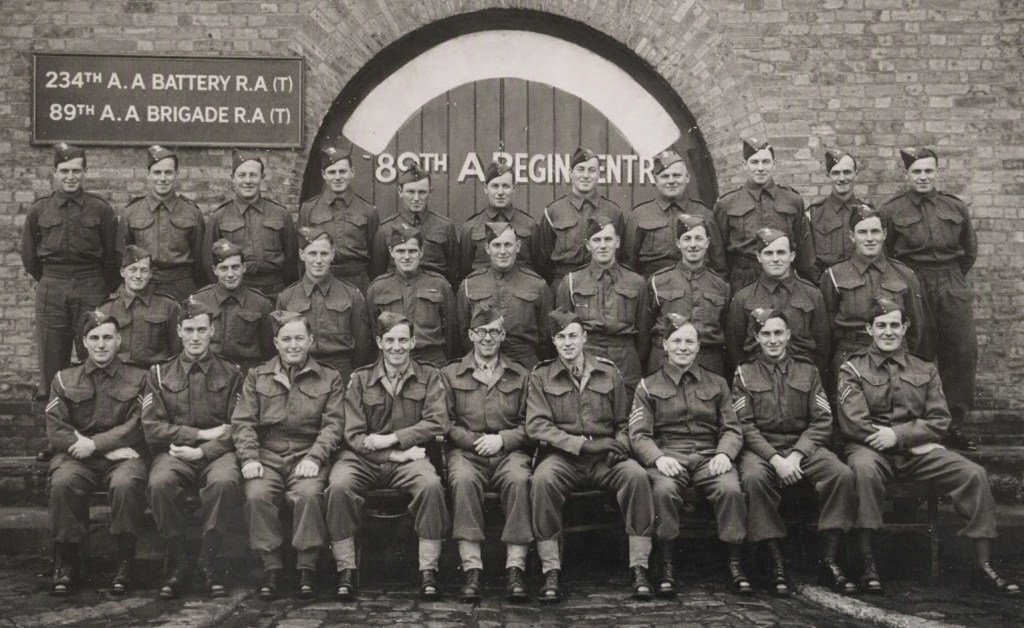
The story of my uncle, Aubrey Garrett is already written within the website but I have not explored the beginings of 234 (HAA) Battery RA. They were formed in 1936 when 223(HAA) Battery were cloned, effectively doubling the air defence capability overnight. 234 took up residence in the Drill Hall in Sandwich, taking over from the old (Cinque Ports)Field Artillery unit which had been there since WW1. On the day they were mobilised, 24th August 1939, they together with a section from Deal and Ramsgate, moved to the Battery HQ in Sittingbourne and awaited orders.

They went to Rainham in Kent the next day and subsequently defended the docks at Chatham through til the end of the Battle of Britain. They moved to Butlins in Clacton for training and refit ready to deploy to Egypt… The rest is in the book! Please have a look at my podcast https://youtu.be/fbHSlbjnGHc?si=uOpjpUIkU1w28X0h and a further link to my book ‘The Letters’ is at the end of this post. More news on Sandwich drill hall in the next few weeks!!! keep checking back!

The Letters https://www.amazon.co.uk/Letters-John-F-Bennett/dp/1399976907

Eclipse Mania…

I am but a simple person who’s wants and needs are not extravagant nor foolhardy, but as I wander aimlessly through life I get more disheartened. The solar eclipse was meant to be the biggest event in our history, billed as a ‘once in a lifetime occurrence’ you simply cannot miss, the way it was sold made it on comparison to the Fall of Rome or the Black death in magnitude. That is fine if you wish to get caught up in the media hype but I don’t follow this at all. It’s the basic things I have trouble with and the devil that is social media is as always, the root of the problem. I read yesterday that most suppliers have run out of ‘eclipse glasses’ because purchasers have swamped the market, big deal why do you want to look at the sun? It’s not that you haven’t seen the moon before is it?

So after that rambling introduction here is the punchline, social media once again, has told everyone it doesn’t matter that you can’t get the overpriced and cheaply imported plastic glasses from TEMU(Other suppliers are available!) you need to create a pin hole camera and place it in front of the sun whilst holding it on a dark surface, easy we did that as kids, no big deal, in fact I created one from a tree whilst out last evening, I simply poked a small hole in a large leaf of a lime tree (again other trees are available) and held it over my phone and perfect a crescent. Nice last one I am likely to see as slowly descending into senility (or is it stupidity who knows). The real issue is the ‘experts and influencer’ suggest you raid the kitchen cupboards and remove a colander and a slotted spoon and use them to view the sun instead, sound information but needs qualifying to get the true message across though.

What I saw last night amazed me, the old market town of Sandwich has an ancient toll bridge which until 3 nights ago was the main thoroughfare for small vehicles into the town. A huge tanker 3 times the signed weight limit took out a huge chunk of wall on the bridge. Chaos ensued and the bridge was closed except for those residents who live just across the way to pass on foot… Fine a good safe plan but last night what I witnessed had me in stitches, visitors and residents alike took to the bridge by the gross, they all had colanders and spoons either with slots or holes just as asked by the ‘influencers’ but not thinking it through nor probably caring, they held said items up to the sun and looked through them directly at the sun! They looked like members of a cult awaiting retribution from a long lost alien society returning just to get even. What made it worse, the bridge wall broken by the tanker was dislodged and sitting precariously on the pavement. They were all standing or sitting on it completely dangerous, if it had collapsed the wall and all 45 sun worshippers would have ended up in the river Stour. They would not have got too wet but as it was low tide all would have gone 25 feet down in the mud with a rather large wall on top of them.

I am getting old; we went home for a nice cup of tea and a slice of cake whilst gently shaking our heads.

https://www.amazon.co.uk/Memories-Kentish-village-childhood-innocent/dp/B096TL7K83

Life as a Grocer/Shopkeeper

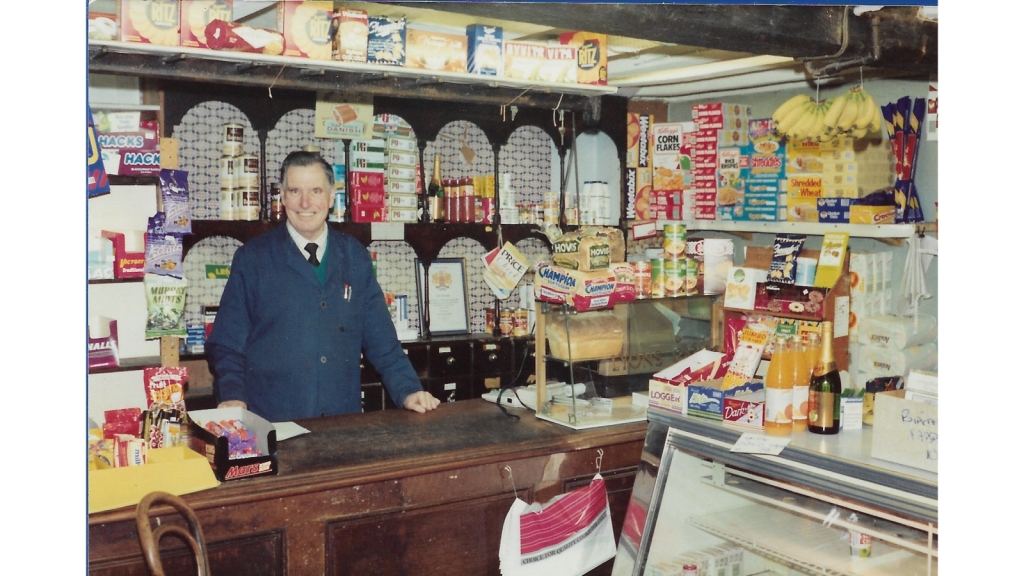
My father left school aged 14 and started his working life in 1940, in the little grocers shop in the village of Ickham in East Kent. Dad always wanted to write his story encouraged by so many of his old customers, but didnt have the skill and today’s technology. I am fortunate to have an interest in local history and have written my childhood memoirs which tell his story. In the late 1990s he was interviewed by an old family friend, Mick Wigmore on camera. The result is below but please be aware the first few seconds the tape it very noisy but it settles when the title page starts. Also please bear in mind dad has no experience talking on camera so it sometimes get a bit slow but I think you will get the gist of what he is trying to explain.

An experiment with insulation…too much time on my hands!

Life can be challenging at times, but of late I have learnt to take things as they come, shrug off the problems and carry on. Recently however, I discovered a complete win which landed at my feet completely free of charge!

                A while back I had been given a pile of rectangular fluffy sheets to assist with the house move for wrapping glass etc, I was about to discard them once the move was complete but I had an idea. The sheets were insulating material of a very high standard which got me thinking. The source of these sheets was in the packaging of the ‘Hello Fresh’ boxes, (other makes of food boxes are available!) food for a week if you are busy people and I get that, after a long days work the last thing you need is to visit a supermarket. One of these boxes lasts for 5 days so my calculation is that you need 73 boxes for a year  equating to 146 sheets.

                I set up an experiment to see just how insulating they are, I cooked two slices of bread in the toaster, placed them on two plates and covered one of them with the insulating material, the uncovered one went stone cold within 10 minutes as you would expect, but gently lifting the material on the other plate while gingerly poking my finger at the toast, realised the bread was still hot. I amused myself for a while by adding  peanut butter mixed with equal amounts of Marmite on the cold toast and munched it slowly. After another 10 minutes I tried again and to my utter amazement it was still very warm. Finally after 40 minutes it was cold, I consumed that slice with the same topping and considered my options.

                If the material retains heat that well there must be a useful purpose for these sheets other than to discard them causing waste. It dawned on me that I could save some money with the heating on my workshop, I say workshop, I haven’t made nor fixed anything in there since we moved it is far too chilly. It is a lined structure but uninsulated, the heater is electric and doesn’t really do much so I formed a plan. I have noticed many households have the Hello Fresh boxes, you see them sitting on doorsteps while the owners are at work, I wrote a note for all the houses and requested I perhaps could have the insulation to save the general waste bin volume allowing for real rubbish placement.

                After a couple of weeks, I collected the bounty from the houses, to my surprise most people had hoarded them in case they would be ‘useful’,  I ended up with over a hundred! As you can imagine the management suggested they should be thrown away but after I explained what I could do with them and was issued an authority chit to allow them on the premises.

I purchased some industrial strength aluminium foil and a tub of glue to stick gorillas together with, after a while of careful cutting and sticking I made a reasonable insulation sheet, I proceeded to staple them to the walls and ceiling of the workshop, it took hours  but by supper time the task was complete, I had a hairy ceiling and walls it looked rather daft but I thought I would test it. The foil was stuck with the shiny reflective side facing downward hopefully reflecting heat back through the material sheets. I turned on the heater, shut the door and went for supper. About an hour later I returned and turned of the heater, it was positively hot in the room, far more that I had noticed before.

 I went indoors and got stuck in to watching Masterchef and some people dancing while dressed as furry animals and completely forgot the experiment. In the morning I rushed outside in my leopard print slippers and matching dressing gown expecting to walk into a freezing room. The journey was fraught with neighbours laughing at my attire from across the boundary, but I was not put off. I opened the door and to my delight walked into a room that was positively hot!

I can now whittle sticks while sitting in my shorts rather than winter coat and woolly hat, that gave me a thought… I went indoors and pulled out my rule and calculator, after a while and another round of toast I worked out I would need 13,140 sheets and 3 rolls of foil to insulate between the rafters in my loft. I think it will only take 4 years to achieve, think of the savings and the heat!

Here is a link to one of my lesser known but very thought provoking books https://www.amazon.co.uk/Hell-Within-My-Head-following-ebook/dp/B0CN3FH2PQ/ref=tmm_kin_swatch_0

The home shopping experience!


We now live too far away for an out of town supermarket, the thought of leaving our rural idyll is just too much for us pensioners. Management takes care of such matters and it has worked smoothly thus far, magically, a man arrives with boxes and after speaking to the dog for several minutes proceeds to deliver groceries of a very high standard. I witness all of this from afar in my workshop knowing full well my interference would not be welcomed, where for instance do the toilet rolls live?
This week it was deemed I had passed the training and could be allowed to deal with it by myself, the Merc fired up and she was gone! Coffee with the girls whatever that means! I was instructed to sit at the kitchen table, not move and watch out for the delivery guy, rush out with reusable bags and to quote ‘ be nice’. We have a panoramic window in the kitchen looking out onto fields and orchards, a donkey and a ‘small horse’ graze just the other side of the fence, this gives a bit of free time to watch the buzzards and the rabbits busying themselves within a few feet of the road.
I had never noticed how much traffic we had on the road during the day, yes at school time the usual whacky races happen, our drive is used as a pull in as they are unable to pass due to the narrow road, so I waited at the appointed time slot with eagerness and a great deal of trepidation, maybe this time I would leave the shopping in the bags and request a revision exercise when management returned?
Within a few minutes a Sainsburys van slowed and pulled into the drive, I waved and grabbed the bags, put on my coat and woolly hat and dived out the door. As I got to the gate he drove off leaving me standing there, most strange? I went back indoors removed the outer clothing and returned to my coffee which by now was getting a little cold. A few minutes went by and a Tescos van pulled in, I repeated the process and again it was gone by the time I managed to get outside, I thought this is getting tiresome now, I should sit with my hat on and be prepared to run at a moment’s notice.
I had barely sat down and the Tescos van came slowly back the other way and stopped level with the drive, back out again I went to see him reversing up next doors drive. A cheery wave and I asked if we were next? He explained that we were not on the list in his best Polish and I retreated back indoors.
I am not sure about this home delivery lark, my step counter has noted 4000 steps and I haven’t been further than the bathroom today, another 1000 and it will be time for my afternoon nap!
A few minutes went by and a Waitrose van crept slowly by with the driver looking at the house names, I rushed out again to be told he was looking for someone else and he had forgotten his glasses so was struggling with house names, should he be driving at all I wondered. As I went indoors again and by now the labrador is getting fed up with all the comings and goings and has settled into the sofa for in his view, a well earned rest.
There was a lull and remembering the old adage about buses, 3 delivery vans became all tangled up in the road, the Ocado guy pulled into my drive to let the other 2 go by but as before, but by the time I arrived at the gate he had gone. The Bookers wholesale vehicle wasn’t mine either, we don’t have a wholesale ticket so with bated breath I stood, bags in hand waiting for the other vehicle to move. This time I was in luck, it was Morrisons who drove straight in pulling up right by the gate, the cheery chap then proceeded to speak to the dog over the gate whilst pointing out the substitutions, I am not always certain what logic they apply to this process in the shop, perhaps its random and quota filling but I was perturbed to see that the block of cheddar had morphed into dairylea slices and the roast chicken had changed into a pack of chicken slices from the deli counter, they were rejected instantly.
As I packed I noticed a large leg of lamb, we certainly didn’t order that as we get our recently fluffy and cute lamb from the local farm shop. I gave it back to the driver who returned it saying it must have been from someone else’s order, just throw it away as I can’t take it back! What a weird system?
On completion of the transaction the driver petted the dog some more whilst I headed to the workshop, fitted a new hacksaw blade and cut the leg in half ready to freeze, management will be pleased! I am not going to do this again, far too stressful and I am sure it would be easier to go to the shop…
https://www.amazon.co.uk/Memories-Kentish-village-childhood-innocent/dp/B096TL7K83

Civilised feeding arrangements

Over my many years in the British army I worked in a NATO multinational force many times, each country bringing their own unique skills to the table. Their professionalism was first class and I enjoyed my time immensely. One exercise sticks out for a strange reason, back in 2001 I went to France, Soissons to be precise, it was a traditional army camp in the Champagne region but it was adjacent to military ranges almost untouched since the First World War, trench systems still intact and rusty barbed wire everywhere.

The catering arrangements stood out above all others I had experienced in both exercise and operations, the French army certainly know how to feed the troops. When working in a headquarters everyone works two shifts usually 6 to 6, my role was quite insignificant in the greater scheme of things, I worked out road moves for a brigade and how much fuel to arrange etc.

After the first night shift I handed over to my day shift opposite number and headed to breakfast, instead of the usual cereal bacon and eggs etc, it was a full 3 course evening meal with a choice of French wines. Waiters with white tea towels over their arms, white shirts and bow ties were everywhere! I didn’t relish a full meal and wine before going to bed but entered into the spirit along with all the other staff, I would stress this was not an officer’s mess just an all ranks cookhouse! Frightfully civilised, I was thinking they might expect formal dinner suits but all was ok!

I slept through lunch and went for a meal before my next shift, to my surprise I was faced with a full cooked breakfast and a further choice of wine! This went on for 2 weeks and when I finally went back to normal it seemed so strange eating normal meals, what a civilised way to soldier! No wonder guys join the French Foreign Legion! A thoroughly enjoyable and civilised exercise! It was almost as if we had been transported back to the Napoleonic era, mess silver, waiters and port in excess!

To Bubble or to Squeak?

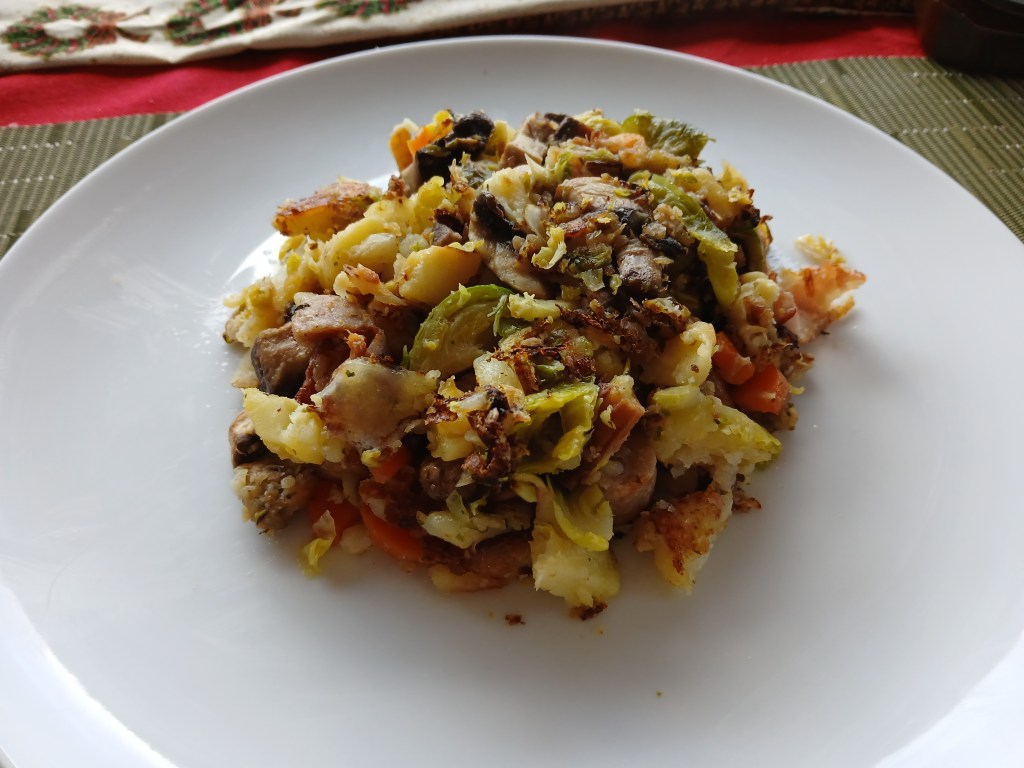
Traditional Bubble and Squeak has been around for many years; it was a way of using up vegetables after a roast dinner to create a meal for the next day. It was a staple for the working classes for many generations, usually eaten at supper time on Mondays, the only exception would be on Boxing day when the vegetables would be fried and eaten with bacon, black pudding, mushroom and egg for a hearty breakfast.

It takes its name from the cooking process; the vegetables are chopped by hand and put into a shallow pre heated, lightly oiled non-stick frying pan. The vegetables are spread out to fill the pan and pressed down tight with a spatula, this is to ensure they get thoroughly brown but with the air excluded the edges emit bubbles and a high pitch squeaking noise, hence  ‘bubble and squeak’, cook for about 10 minutes turning every few minutes to brown the surfaces.

Most leftovers can be ’bubbled’, parsnips, roast potatoes, peas, celeriac, cabbage, sprouts(essential!) carrots, green beans, butter beans and broccoli to name but some. I also chop up pigs in blankets, leftover stuffing and add raw mushrooms  for texture, a hearty breakfast before setting out in the snow for a day’s frivolity.

The modern-day TV chefs cook it in a ring on the skillet, but I find it doesn’t brown as it should and for the privilege, they charge a fortune for it as its ‘in vogue’

When serving the age-old debate rears its head again… Brown or Red sauce? To some food of the gods to others sacrilege where do you sit in the debate? I sit on the fence keeping my own counsel.   

The Battle of Britain – so long ago

We are fast approaching the 85th anniversary of the end of the Battle of Britain, so named by Sir Winston Churchill in a House of Commons speech where he indicated that the Battle of France was ended, and the Battle of Britain was about to begin.

He also coined the phrase ‘The Few’ who were the brave pilots that went head to head with the aggressors to our shores. This was to engage the public to support the RAF aircrew and come together as a united nation, indeed the ‘Spitfire fund’, which was collecting donations towards the cost of a new spitfire announced by Lord Beaverbrook to support the war effort collectively. The cost of a new fighter was 5,000 pounds, a large sum then, but deemed achievable in towns and small communities across the nation. In reality was they cost nearly 13,000 pounds which was a great deal of money in 1940.

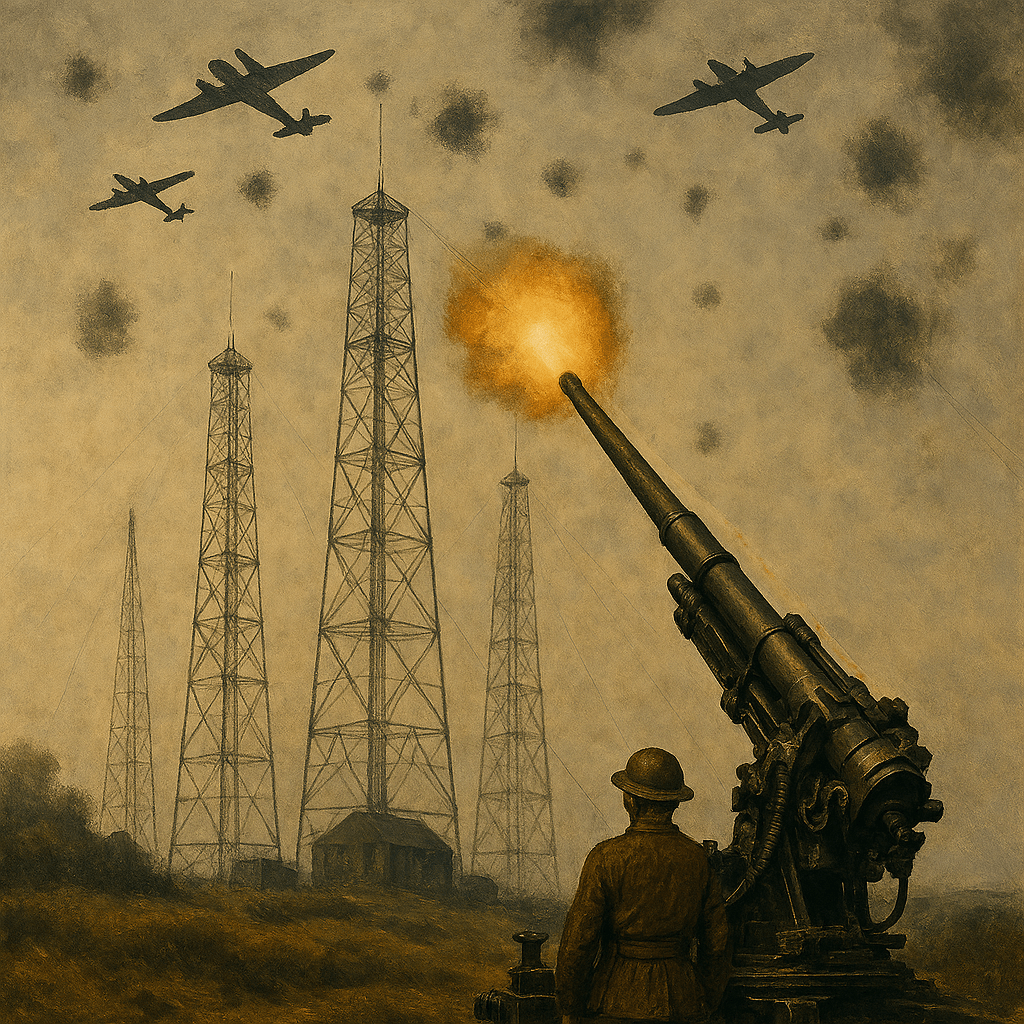
Over the years there has been a friendly rivalry between the RAF and the Army as to which service contributed the most towards the enemy losses, according to the war diaries now available from the National Archives 300 enemy planes were shot down, 75 of these were from the 75th Heavy Anti Aircraft regiment around Dover with the control centre in the bowels of Dover castle. In reality the two worked together, the AA guns dispersed bomber formations, forcing them higher and leaving them vulnerable to RAF fighter attack. The RAF accounted for around 2,300 aircraft shot down during this period, from dawn til dusk they waited for the call, something fighting 4 or 5 times a day, very debilitating during a very long hot summer.

Whatever the arguments for and against between the 2 services, most of the participants have now drifted away and those remaining face old age with pride, they did a good job and should be incredibly  proud, as should we a grateful nation for the suffering, fear and uncertainty of those bleak times.

Looking around now it would be hard to see any evidence of this activity, the former RAF Hawkinge once a front line fighter station is now a housing estate, only a museum stands testament to what happened there in 1940, the headstones in the graveyard tell an individual story. None of the original gun sites still exist from that era, only those created in 1941 for targeting enemy shipping are still evident such as the Capel Battery and Wanstone farm. If you visit Capel the Battle of Britain memorial is situated on the cliff top with its iconic stature of a fighter pilot sitting looking skywards out to sea. I commend this as a must visit site if you are in the area.

Time has moved on, the grass and undergrowth has engulfed history please remember those dark days of 1940, 3 generations ago and be thankful for their service.

One man’s story can be found here: https://www.amazon.co.uk/Letters-John-F-Bennett/dp/1399976907

Christmas means Brussels Sprouts!

I know it’s early but…are you Christmas ready? Good preparation prevents poor performance, all round the households of Kent we are just getting through the August Bank Holiday weekend and then it all starts in earnest. In 3 weeks, the swallows will be heading south and trees starting to change colour, it’s all downhill to Noddy Holder, Wizard and a doleful David Essex!

Just a few months to go to visit the family and friends you missed out on last year. Presents? Tree (eco-friendly of course)? Turkey ordered? Decorations ready? B&M front garden reindeer with the flashing nose oiled and ready. Cards ready to post? Yes, “tick” to everything, but what about the most important thing? The glue that sticks everything together, the small, but probably the most significant thing of all? Yes, I am talking about the Brussels sprout, that little gem of flavour which has come in for some criticism over the years. Brussels sprouts were cultivated in the 13th century in significant numbers around the area of Brussels whence their name was derived.

Start cooking them early…or not!

The legendary broadcaster, Terry Wogan, used to joke about getting the sprouts on early to make them edible. Sometime in August was always his recommendation. But those who love these healthy little vegetables know very differently, about 6 minutes after being dropped into boiling water. They are a member of the cabbage family; each individual sprout is in fact a bud, awaiting its chance to swell and grow and ultimately flower to produce seeds and start the cycle all over again.

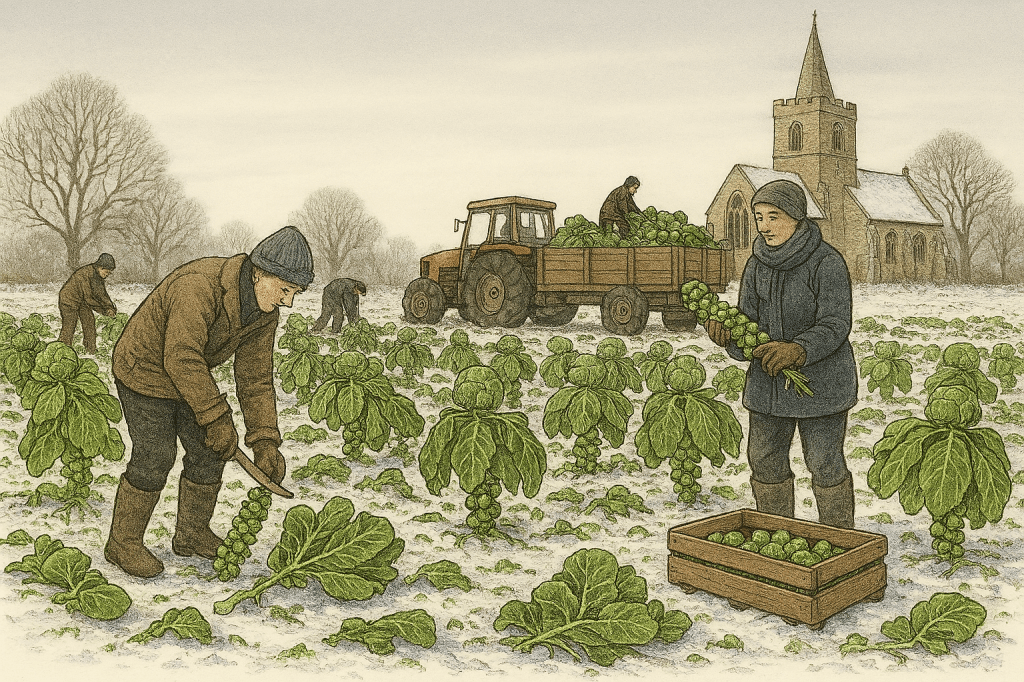
They were first introduced into Europe in the 5th century and cultivated in the 13th century in significant numbers in Belgium. This was around the area of Brussels where their name was derived. The Latin name for the species is Gemmifera meaning “bud producing” and, once set, they grow slowly and are an ideal harvest from September through to March where we wave them a fond farewell until the following season.

Not the children’s favourite

As a child I disliked them, noting they always seemed a little bitter but, in recent years, the bitterness has been bred out of them; indeed, after a good frost they become almost sweet! They are extremely nutritious if you include them as part of your “five a day”. My own daughter didn’t take to them when she was small, but when they were described as “baby cabbages”, she polished them off thinking they were indeed of that species just a bit gullible at that. However she couldn’t cope with curry and sprouts for Sunday lunch!

Television chefs have increased their popularity in recent times by frying, adding bacon or chicken, putting them in a cream sauce, and generally messing around with them. Suddenly sprout tops became fashionable, pan fried with garlic and so on, but this didn’t catch on as most tops were damaged by hungry pigeons so not aesthetically attractive. but they are not the favourite vegetable of the Millennium or Gen Z generations. As with all things TV chefs, once they start using it on TV up goes the price, just look at Pigs trotters, Lamb shanks and liver!

The cost of these little gems has risen in recent years as it’s time-consuming picking them by hand. Realistically it’s only the supermarkets who dictate the low cost; as you get identical sorted and washed and peeled varieties, you do wonder what the waste is during the preparation process.

A few years back, local farmers came up with a solution to make buying sprouts more cost effective, they would employ 30 people to pick and bag millions of individual sprouts, this was not  cost effective; it became the norm to just cut the stalks completely and sell them individually so the labour force could be reduced by two thirds, and once again they became a cost-effective accompaniment to a meal. The local farm shops are full of them from November, priced between one pound and one pound fifty pence!

More ways of cooking brussels sprouts

I have been asked how I like my sprouts, well I enjoy them best two ways, firstly with the traditional roast dinner and, more lately and probably gross to most people, sprout masala with a side of curried cauliflower.

So get out there folks and buy your sprout stalks soon: they keep best outside in a bucket of water. Have a fantastic Christmas and remember to put the used stalks in your garden or food recycle bin.

The Letters is now out on Kindle!

The Letters is now available on Amazon and Kindle unlimited, released on 4th May 2025 it can reach a wider audience. Here is a quick link! https://www.amazon.co.uk/dp/B0F7HF8VDF/ref=mp_s_a_1_1?crid=254ZR194BK15C&dib=eyJ2IjoiMSJ9.VvXTFPMoOqrIFH3YkTGJUA.JEKcEs8sz3bK-x2cudcJmI0GEwiokQ815zfeUzCxBT8&dib_tag=se&keywords=the+letters+john+f+bennett&qid=1746514525&sprefix=the+letters+john+f+bennett%2Caps%2C82&sr=8-1

The Letters – excerpt from my recent book

Chapter Four – the journey to Egypt

Friday Dec.27th

No 866845 Gnr A Garrett

29894 (C). GHQ 2nd Echelon

C/O Army P.O. 725

Dear Mum and Dad,                           

                                                                This comes to you from mid ocean to let you know that after a riotous bout of sea sickness I am once more my hale and hearty self. We are know sailing in calm and fair weather and am enjoying to the full the restfull sea cruise bestowed on me by a benevolent Government. Beyond saying we have actually left England I am not allowed to tell you where are or where we are going (even if I knew)

                The first four days out I was violently sea sick, so much so that one old sea dog asked if I had a season ticket for my part of the rail. But I was not as bad as some of the others and I soon became quite O.K. until and today when I am regarded as a Mariner second only to Popeye.

                I hope you had a fine time at Christmas. Ours was better than we expected to get on such an old tub as ours. When we first saw her even the hardiest of us who were unwilling to risk our lives on such a decrepit crate and there were some who even doubted our ability to reach the three mile limit.

                But so far she has refused to sink and we are all easier in mind now that we know for sure she is not ‘Sir’ Richard Grenvilles flagship “Revenge”, as we had at first thought, but the “Altmark,” in disguise.

                By So far this about all that has happened on the voyage but If we get any further oppoti opportunities for sending letters Ill let you know.

                Don’t forget you can send letters to the address at the top of this letter.

                So Cheerio for now,

                                Yours,

                                Aubrey.

Don’t let Bill or Raymond know I was sea sick or they/ll harp on it for years.

A Corbett 2lt (censor)

The ship that transported the unit plus others from Glasgow to Port Tewfik in Suez, was HM Transport ship T5, the TS Canterbury. This ship was owned by Southern Railway before the start of the war. It was exclusively used a ‘boat train’ when the railway used to speed up the journey from Paris to London before it was requisitioned in early 1940.

The capacity of this vessel was probably about 600 but, on this journey, it carried 49 officers and 1419 men (albeit they lost a few to absence when they reached their destination after a night out in Durban!)

Who could have imagined where this small steamer would have taken troops during the war, it was built to hop across the English Channel eight times per day from Folkestone. I wonder if Aubrey recognised it as he spent quite a bit of time in Folkestone harbour before the war? That sense of ‘oh my goodness’ when he first set eyes on the familiar vessel.

It took part in the evacuation from Dunkirk, saw the equator several times and rounded the Cape of Good Hope, went to the Far East, and she crops up on D Day +2, transporting troops to Normandy. Not bad for a tiny vessel!

The route taken would have subjected the convoy to the rough and violent seas to the west of Ireland, with all that the winter could throw at it. Seasickness must have affected nearly everyone. This vessel would have been one of the smallest in the convoy.

It’s strange that Aubrey states that the ship is an ‘old tub’ and a ‘decrepit crate’. The vessel was only eleven years old! Evidently the cause of the soldier’s illness and upset stomachs were directed in the direction of their transport.

The German ship ‘Altmark’ was in the news in early 1940 during the events in Norway. The Altmark was a German resupply ship that shadowed the heavy cruiser Admiral Graf Spee. When the Graf Spee attacked allied merchant vessels in the Atlantic, the crews were transferred to the Altmark as prisoners of war. The Graf Spee was scuttled in Montevideo harbour following a successful British Naval action which seriously damaged the ship. The Altmark made for home port but became low on fuel and headed to the then neutral Norway.

On the 16th February 1940 she was spotted by an RAF reconnaissance aircraft and through the determination of the Prime Minister to obtain a morale boost for the British people, wished to free the British sailors. The Altmark was cornered in a fiord by HMS Cossack on the 17th February and after a short exchange of fire, the Royal Navy boarded the vessel.

Rumours still abound that the crew used old fashioned Naval cutlasses to frighten the Kriegsmarine sailors. When the ship was searched the Navy found 299 prisoners who were taken back to UK port. The Germans suffered four sailors killed in the altercation with no allied casualties.

            Because Norway was then a neutral country, the Altmark was allowed to continue its journey. It is said the Adolf Hitler changed his view on neutral Norway after this incident, at that time they were importing steel from Sweden which was transported to the sea ports in Norway for onward movement to Germany. Norway was next on his list for occupation to safeguard the economic route.

            The news of the prisoner rescue was a tremendous morale boost at that time, rationing, blackouts and control of movement in the UK were taking their toll. The news of the rescue gave some sort of justification that actually something was happening positively in the war to date1.

Here is the link to the book https://www.amazon.co.uk/Letters-John-F-Bennett/dp/1399976907/ref=sr_1_1?dib=eyJ2IjoiMSJ9.fzmE7gLVLZn4l1gq6bCEW_Gf-z-Jy4t9rSPwI0IB-is.Y_OlRnmMc9U7V0l-JkyvbSRKmS0k7eNmfmMhntyMf5M&dib_tag=se&keywords=the+letters+john+f+bennett&qid=1720000964&sr=8-1

A trip to Umbria – well worth the visit!

On a whim we decided to visit Italy, it was one of the places we had on our bucket list but somehow, we hadn’t got round to arranging a visit. We had a seen a deal through one of the companies who sell the holidays which are not snapped up immediately, a five-night half board trip to Umbria.

We flew from Stansted via Ryanair but this will be the last time we travel with them. The airport terminal at 0530 in the morning was similar to a riot, holiday makers were fighting with each other, drinking and the horrendous hubbub was deafening. Once we had gone through the passport control it seemed to calm down but the whole experience was very tiring and somewhat fraught.

The flight was uneventful and during the final stages, the view down on to the Italian Dolomites was spectacular. As we descended into Perugia the buzz in the cabin quietened as everyone fastened their seatbelts and we experienced an uneventful landing.

Perugia airport was basically a rural airport with minimal international traffic, used by budget airlines from France Germany and the UK, so very small but perfectly placed for the local region. We hired a car with no issues and then drove the hour to the hotel. The hire car we chose was adequate for the two of us but on the way to the hotel the fuse blew on the cigar lighter, not really essential in normal use but this was the power source for our satnav. Fortunately, we were within sight of our objective. Rather than return to the hire company I decided to have a quick look in the fuse box, clearly this had been an issue before as all the spare fuses had been removed. I decided what was needed was a paperclip! I thought reception was the best place to find one but they couldn’t understand what I was describing! Eventually after drawing one and going through what seemed lake a game of charades, we agreed that I needed a ‘Grafetta per fogli’, once found I proceed to unwind it and jam it in the fuse holder. The Satnav now worked and I had provided unequivocal evidence to the staff that the English are completely weird!

The countryside in Umbria is a succession of sharp rolling hills with random escarpments mainly set to agriculture and vineyards.  We wound our way up into the mountains, via a small unkempt road to a village set on the edge of an escarpment. As we approached the village it was clear that the whole village was a hotel complex with fields of ancient olive trees descending down the valley. The Relais il Canalicchio was an impressive establishment tucked away in the hills. It has well-appointed rooms, villas, apartments and views to take your breath away.

Upon one of the many hills

The evening we arrived it must have been a quiet day, we had supper on the veranda outside the dining room, the food was superb but the outstanding memory was watching the sun set in the cloudless sky between the hills. This by far was the most spectacular sunset that I have ever had the privilege of watching.

Over the next two days we went south and visited the spectacular historic towns of Todi and Orvieto, both fortress towns from a time long ago after the middle ages, when turmoil was the norm in this part of the world. Orvieto is sitting high on the hill surrounded by vineyards growing the traditional ‘Classico’ grape which produced an excellent wine. The spectacular scenery and quiet roads imbued a sense of peace and stillness. Descending down from one of these towns we went around a bend and the sight of sunflowers in full bloom in the sunshine was incredible. These were grown of course for the oil production which occurs in this area.

Both days we took a circular route and whilst on the inbound leg on day two, we drove through the national park Monti Sibellini which is in the mountainous centre of the region. Views in this area were again out of this world.

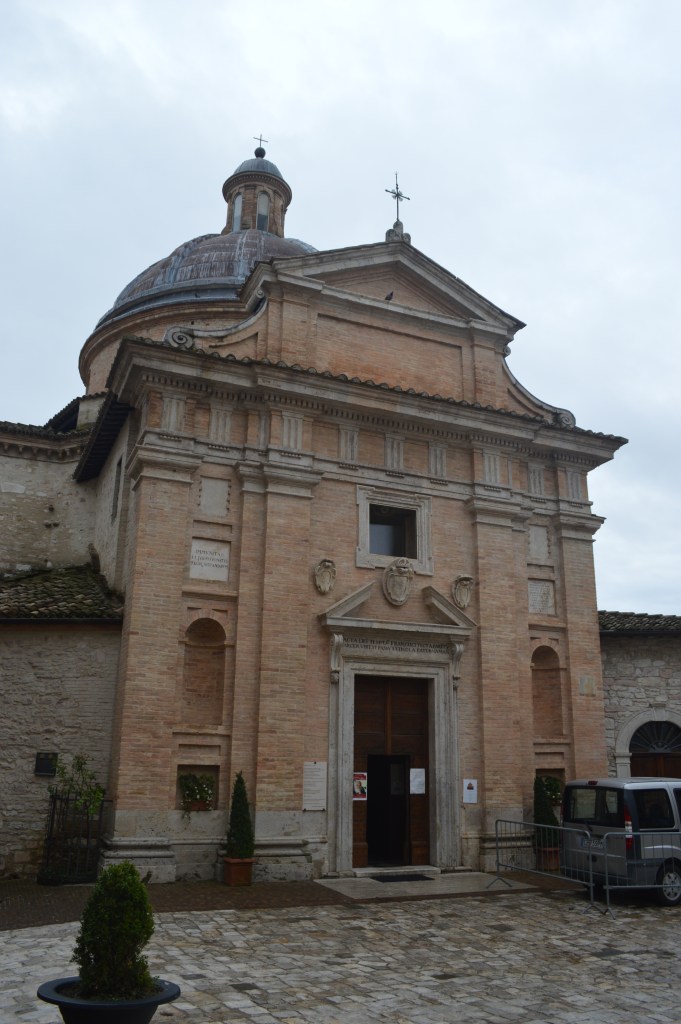
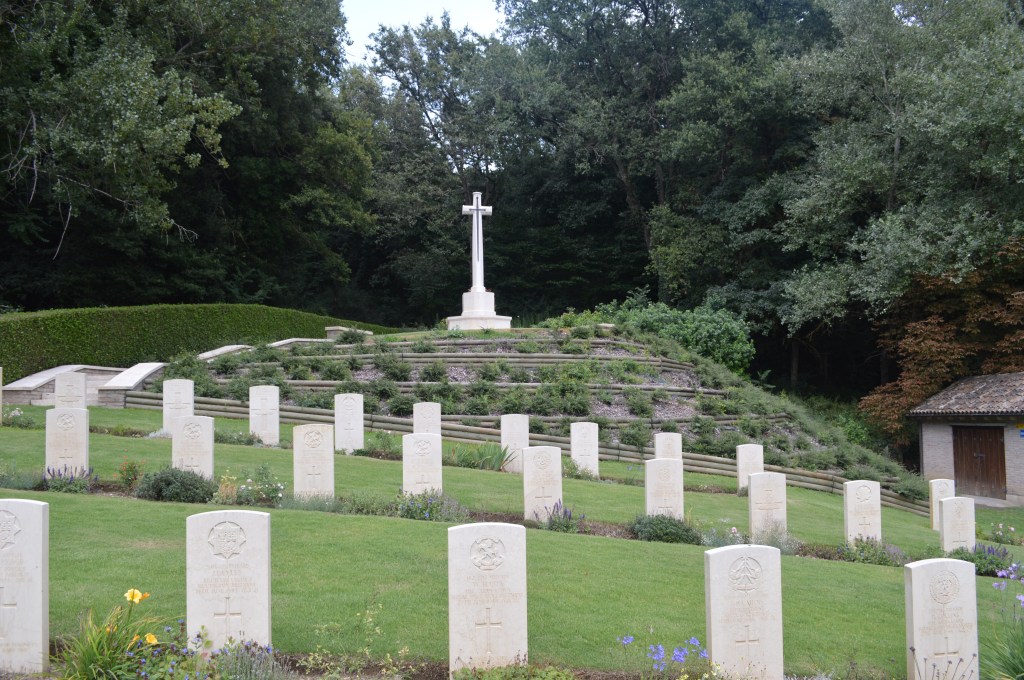
On the third day we drove across the hills to Assisi, the birthplace of St Francis. On route we came across the Commonwealth War Graves site just to the east of the city. We paid our respects to the 23 soldiers from the two local regiments, one of the soldiers was related to a family in the next village where I grew up, so even more poignant.

Assisi is a small town nestled into the side of a steep hill, it would be deemed ‘long and thin’ old buildings and shops specialising in the local religious themes, fridge magnets, candles, framed watercolours and everything to do with St Francis were everywhere. We walked to the west side of the town, and saw in the distance the Basilica of St Francis of Assisi. We followed the ever increasingly narrowing road winding slowly downward with high rock faces and ancient houses towering above us. Just as we thought it was going to be a dead end the vista opened up to reveal the Basilica in all its glory glistening in the morning sunshine. The road had opened up to a large square in front of the building. As I was getting my camera ready, there was a furious hooting of a car horn and as we jumped out of the way, a very old red Fiat Panda was tearing towards us from the narrow street behind. As it drew level, we noted that it was being driven by a nun in full habit, together with a friend both with a stern look. There is nothing unusual about this style of driving in Italy but what you don’t see every day, was a Fiat Panda stacked full of large bags of incontinence pads, driven by a mad looking nun, there wasn’t even enough room in the car for a handbag!

Visiting Italy in the autumn is highly recommended for exploring, it was not too hot and comfortable for wandering around on foot. Bearing in mind the hilly nature of Umbria this was my top tip for visiting, spring or autumn is essential!

Next time we return we will have a look at Tuscany but that is the subject of another Blog!

Here is the link to the hotel, please have a look!  https://www.relaisilcanalicchio.com/en/

We bought the holiday through Secret Escapes, here is their website, please sign up and the deals will keep coming!  https://www.secretescapes.com/

Who fancies a curry? – some of the origins of our favourite food

We take the curry as part of the gastronomic culture of the United Kingdom, but what is it’s origins? Back in the early 1960s Bangladeshi immigrants brought with them their spicy food and set up restaurants little bigger than a corner shop to give their own countrymen a taste of home. These grew and expanded at a pace, with us Brits getting a taste for this spicy food after many years of bland cuisine following the Second World war.

What are the origins of curry? Well, there is no such thing as curry, this name was adopted after British servicemen in India miss heard or miss understood the word Karahi which is a type of heavy cooking pot used to cook regional dishes all over the sub-continent. All over India different variations of ‘curry’ are eaten. Rice is only eaten with a meal in the areas where it was grown in the flood plains and river deltas near the coast. Elsewhere bread was the accompaniment of choice.

When the East India company received permission to trade and have a permanent presence in India back in the 1600s, they needed to protect their interests and trade potential. At that time were not exactly on the best of terms with the Portuguese and Spanish who already had a foothold with the trading game all over Asia.

The East India company raised its own army from Great Britain and Ireland to police its interests in the ever-growing trade network but they soon found a real problem. The food they were giving the troops was prone to going off in the extreme heat, so they adopted the Indian style of food using the spices and flavours enabling meat to be preserved for longer. The chefs used the local recipes as a basis of the dishes and quite soon, the soldiers became used to the spicy delicacies.

The British soldier from then on would crave a curry, no matter where in the world they were stationed, the only exception to this was during the two world wars when the spices were more difficult to procure unless you were based on the Indian subcontinent, Singapore or Burma.

The Officers and Sergeants mess would hold a function, it could be a Beating of the Retreat, a tradition dating back to the days of Empire, a football or cricket match, a games night or just a party. It would always be a ‘serve yourself’ complete with side dishes, sambals, poppadom’s nan bread and the ubiquitous rice. The curry in the army was never served in a formal environment, this was always seen as a non formal meal.

The Army Catering Corps manual of recipes, JSP (Joint service pamphlet) 404 has all the regional Indian recipes from Korma, Jalfrezi, Madras, Pathia and all the other traditional dishes we have all come to love. Incidentally the only one that didn’t start life on the sub-continent was a chicken tikka masala, this was invented according to hearsay in Glasgow back in the 1960s when a customer wanted a sauce with his chicken tandoori claiming it was far too dry! It is alleged that the chef took the hump and as a response, opened a can of condensed tomato soup and the dish, we all love to eat, was born!

My first experience of a curry was somewhat disappointing, in the late 1960s my father worked in a grocers, back in those days ‘representatives’ used to cold call with new products given away as samples. One day Dad came home with three boxes of Vesta beef curry, this was duly prepared and we started to consume this unusual food. We vowed as one that this was probably the most awful thing we had ever eaten, it was rather cardboard flavoured.

To appease the need for a ‘curry’ mum suggested she make a chicken curry the next day. This was a bit better although a little odd, chicken poached in gravy with apple slices, sultanas and banana chunks. This was cooked to death and a hefty sprinkling of hot curry powder put in at the end. I vowed to never eat curry again!

Fast forward to the late 1970s, I renewed my acquaintance with this strange seemingly oriental food after I joined the army and never looked back, I was hooked!

The various breads such as chapatti’s nan and poppadom’s, used as eating implements regionally across the subcontinent became side dishes in the UK as a standard. Even today most of the poppadom’s we buy in the supermarket both cooked and dried, are made in India and shipped over to satisfy the insatiable appetite for all things curry.

We curry lovers need to thank our ancestors who served in the East India company and the subsequent British Raj for starting a culinary tradition that gained pace over the years. Most curry houses are not Indian at all. They are, in fact, mostly owned by Bangladeshi families. And a great job they are doing! Now I have finished writing this. I crave my favourite food, Chicken Madras, pilaf rice, aloo saag, Peshwari nan and of course an ice-cold beer!

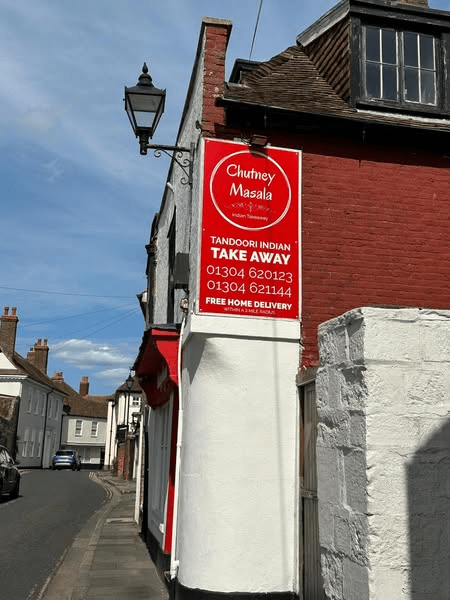
Where is my ‘go-to’curry house these days? Well, it’s not far from me in the quaint Cinque Ports town of Sandwich in Kent. The Chutney Masala is a no frills take away who deliver locally, it is as near perfect as it gets! Here is a link so you can see what fare is on offer! You certainly won’t be dissappointed!

Their phone number is 01304 620123 and facebook link is https://www.facebook.com/p/Chutney-Masala-Indian-TWay-100063699092968/?locale=en_GB
The Interview

I was saddened to see a dead bat laying on the patio this morning. Immediately I assumed the cats had been up to no good. We have a colony of Pipistrelles’ nearby and this appeared to be one of that species.

I called an immediate meeting of the felines who were at least two hours into their daily routine of sleep and generally doing nothing. To catch a bat would require impressive dexterity and to my knowledge, two of the three can barely catch their breakfast from the food bowl due to laziness and a total lack of coordination. I however decided to try and catch them out.

Sampson was first up, he sat there bleary eyed looking as dopey as always wondering I think what a bat actually was. After much questioning I determined the nearest he had come in the night to the bat was sitting on the fence and yawned. Unless the bat was very unlucky and just happened by as he completed his yawn, I think he is out of the running. I dismissed him but he just fell asleep where he stood.

Before I challenged the rest, I thought I would check the security camera. The last time he was seen on the camera was at 8oclock last night so he was out of the running, the lazy little git had been indoors all night…and he was tired? I wish I had the life of a cat!

Next up was Matilda, AKA the killer whale because of her markings and her poor attitude. She refused to come into the interview room so I decided to conduct the interview on the sofa where she was firmly ensconced. Matilda does what she wants and when she wants, failure to observe this usually results and a full bladder of cat pee on the cooker in the middle of the night to convey her displeasure.

I checked the camera first and sure enough she was about in the night, wandering up and down the garden keeping us safe in our beds. At last, I thought she is doing what she is paid to do and not a mouse in sight. There was a complete denial from the interviewee she claimed she didn’t know what a mouse was let alone a bat. In her defence she can’t jump too high and does have the balance of an earthworm. I advised that this was an interview under caution and we could be revisiting the conversation.

Finally, it was Coco’s turn. My suspicions have been aroused because she leaps off the conservatory roof with no thought of how high it is. If you can jump that far in theory you could jump up and catch a bat if needed. Coco denied the crime completely, she hadn’t seen a bat in years…yeah right! She did under the threat of removal of cat treats confess to finding a rabbit in next doors garden, a pigeon, a rook and a bowl of cat food inside the cat flap of the house across the way. The animals she assured me she led home to safety. I was not convinced so I adjourned the proceedings until I had consumed my cup of tea and a piece of cake.

I decided to go for a drive and as I reached the gate, Coco was launching herself off next doors green bin at a sparrow flying down the path. Judging by the height and trajectory, I can rule out any interference in the bat’s demise. At the top of her trajectory the sparrow had travelled on at least 18 feet, so absolutely no chance of catching a bat at full tilt in the dark!

When I returned all the cats were laughing at me. As I walked down the path the bat had moved, it was on the low wall scratching its ears and looking a bit dopey. As I walked up to it took flight and headed back to its roost. It all became clear; we cleaned the windows of the conservatory yesterday and the poor little bat couldn’t pick up the glass on its radar and bumped his head.

The cats will make me pay now, there is nothing like a vindictive cat, there will be fur everywhere and they will invite their friends in during the night and party until dawn. So much for my suspicions, I give up and will go and sit with the hens! Hens with Benefits https://amzn.eu/d/05HG9C29

Life in Lockdown

Life in Lockdown is an irreverent look at life during the Covid lockdown, written as a daily blog looks at the increasingly bizarre behaviour of stir crazy neighbours. It is written from the perspective of someone who served in the military, so beware of the gallows humour! Joking aside, during this time it was quite a reflective period, no vapour trails which always criss cross the sky, the sound of skylarks unheard of over the daily bustle and vehicle movement, maybe a time for reflection back to an earlier time. Its available on Amazon in paperback and Kindle. Here is a link! https://www.amazon.co.uk/gp/product/B0BCNRBPL9/ref=dbs_a_def_rwt_bibl_vppi_i5